2.21 The taxonomy of commodities consists of six concrete sub-types.
In each of the categories noted below 1) to 6), how are the prices formed? Do the prices of all commodities, whatever their category, have the same determinant?
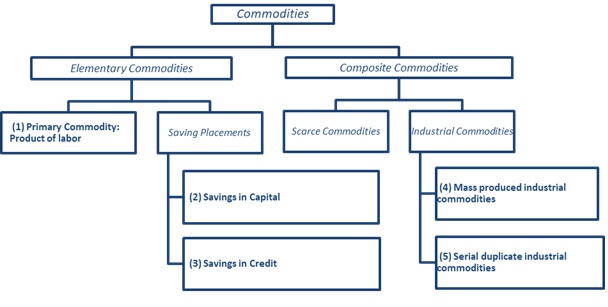
Figure 6 - Commodity ontological taxonomy
1. Primary commodity: product of labor for Wage75
2. Placement of savings in Capital76
3. Placement of savings in Credit77
5. Mass-produced industrial commodities79
6. Serially duplicated industrial commodities80
Notes
- Product of labor as defined in proposition 2.13. ↩
- “In capital”, that is, in the form of permanent financing of an enterprise. This can apply either to an enterprise being created or to one being transformed so that it is no longer indebted. To achieve this, it is essential that its financing (that is, the liabilities side of its balance sheet) consist chronically of nothing but capital, with no credit whatsoever (loans, leasing, or trade credit), and likewise no factoring on the assets side of its balance sheet. ↩
- In credit, that is, in repayable deposits remunerated by interest rather than by distribution of earnings. Bonds are placements in credit. Trainers, bankers, and journalists enamored with “modern finance” tend to claim that credit is merely a form of capital, and vice versa—this conflation exposes the economy to numerous crises. ↩
- Proposition 2.19. ↩
- Proposition 2.20, argument 2. ↩
- Proposition 2.20, argument 1. ↩