Framing the ontology of political economy
"Senseless research is related to unforeseen discoveries. The role of the non-existent exists; the function of the imaginary is real; and logic teaches us that the false implies the true. It seems, therefore, that the history of the mind may be summed up in these terms: it is absurd by what it seeks, it is great by what it finds. »
Paul Valéry3
Eight main questions
Four cardinal points
In an Objective Political Economy, the four cardinal points are, in alphabetical order, competition, employment, money, and income4. At each of these points, two questions of general interest arise.
- On competition: is the market's regulatory force not driven by price comparability? That is, can prices — wages and dividends included — be effectively compared without complex calculation, thereby enabling the freedom of choice?
- On employment : what is the dynamic between capital accumulation and profit that guarantees a state of full employment? Which rules of public financial management best provide for obtaining this benefit?
- On money: how do these public financial management rules, coupled with price-comparability-driven competition, provide what is necessary to preserve the long-term purchasing power of placements in savings accounts, loan securities, shares of corporate capital, and individual business capital? What about exchange rates with the currencies most used in international trade, as well as national trade balances with The Nagging Problem of the Balance of Payments (the title of a book published by Jacques Rueff in 1965)?
- For incomes, what trends normally affect their national totals? If the complete distribution of these totals is not regulated by a tamper-proof key, where is there an arbitrary division and what does it imply to assume it?
Morals and morale
The most widely accepted answers to these last two questions – those concerning income – orient morality and morale within the society. They represent the prevailing opinion with regard to the fact that it is preferable that the transfers imposed by the legislator should be and should not, pursuant to Article 13 of the Declaration of human rights and Citizen of 1793:
"For the maintenance of the public force, and for the expenses of administration, a common contribution is indispensable; it must be distributed equally among the citizens, according to their capacities.”
But in such a matter, what does "also" mean? Is it proportional to the taxpayer's income or through progressive scales? In this case, the things that are seen and not seen (Bastiat) make it doubtful that the progressivity of the average tax rate per tax household contributes more to the common good and to the sufficiency of tax revenues than the proportionality of this same rate. In the Initial Propositions of Economic Science discussed below, it is a question of providing the criteria for the equity of the price by category of economic exchange. Without this, the idea of fair economic exchange remains held in clouds from which errors are taken for truths, for lack of ad hoc instruments for observing reality (for example, the error of the distribution of working time which can only turn into the sharing of unemployment; or the error of the reduction in the cost of the lowest paid labor, which can only lead to a social divide and an addiction to subsidies). Fair pricing criteria by economic exchange category are politically necessary for the selection of public actions that civil society has the greatest interest in demanding or rejecting in economic matters. An organic law for the management of public finances, such as the French LOLF of 2011, and a tax reform whose recitals do not explicitly refer to the economic theorization that inspires them, are democratically flawed since they amount to carrying out a hidden political project. Mutatis mutandis, the same is true of the programs of the political parties and the platforms of the unions, including the employers, of course. The improvement of "social dialogue" and "social refoundation" are above all economic affairs.
Four scientific on-call duties
Definable set logic
The logic of finite sets is based on the axiomatic specifications of each of the two possible definitions of any such set:
- "in extension" by an exhaustive list of the elements of the whole under consideration;
- "in intention" by a statement of a property common to these elements and to them alone.
Conceptual Foundations of Accounting
The acquis is that of the conceptual foundations of double-entry accounting. The distinction between stock (balance sheet) and flow accounts (income and expenses) is fundamentally objective. It logically implies other distinctions, two of which are particularly important for both practical and theoretical purposes: the distinction between stocks which are of financing (liabilities) and investment (assets), and the distinction between expenditures which strictly speaking are either charges or investments.
Economics can be the subject of an exact science
The refusal that also helps a lot to bend to the methodological rigors of objective political economy is that of a systematically negative answer, to the question: can economics be the subject of an exact science? Answering in the affirmative does not at all imply the assertion that any phenomenon qualified as economic can be accurately described and predicted by this science!
On the other hand, only the accreditation of the idea that economics can be the subject of an exact science, however limited the field, will lead to the recognition of a great historical fact. Economic theory has been scientifically misled. By his claim to make his conception of the human condition prevail, his space for investigation has been too extensive. His terminological flippancy has made it a kind of phlogiston, the fluid that the ancient chemists had imagined to explain combustion, right down on some of its fundamentals (marginal usefulness, especially in its neoclassical version). His postulate that all prices have in common more than being economic exchange-values has led to the error of reasoning called ‘petitio principii’; if this is really so, it is to be deduced from an investigation of the formation of prices by category of economic exchange, and not to be taken as proven before it has been proved.
A set of initial economic propositions
Political economy
Since the first twenty years of the nineteenth century, and at the initiative of the Frenchman Jean-Baptiste Say and then the Englishmen Robert Malthus and David Ricardo (before John Stuart Mill and Alfred Marshall, among others), the titles of treatises on economic theory often include the expression "political economy" (Traité d'—, 1615, Antoine de Montchrestien).5
Etymologically, a theory is a continuation – from the Greek thêoria, "procession, parade".
Logically, such a sequence is made up of propositions – in the sense of the Latin propositio, "statement". Under these conditions, rehabilitating a political economy or undertaking to reconstruct one better shaped by assembling a set of primary propositions, is part of a tradition; with the merits of the latter, on the one hand, and methodologically perfectible on the other.
The basis of a theory of the commodity
Without having a theory of the commodity as its basis — an intentional definition of the commodity, a division of all commodities into subsets that are themselves intentionally definable — a theory of commodity exchange is constructed as if taking into consideration the classes of objects exchanged could not avoid truncating and biasing primordial economic reality. Since the first chapters of economics textbooks do not yet include a theory of the commodity, an original gap is perpetuated, while it is obvious that mistaking bladders for lanterns constitutes a permanent danger when it comes to exchanges and transfers of objects that make their owners more or less comfortable. Etc.
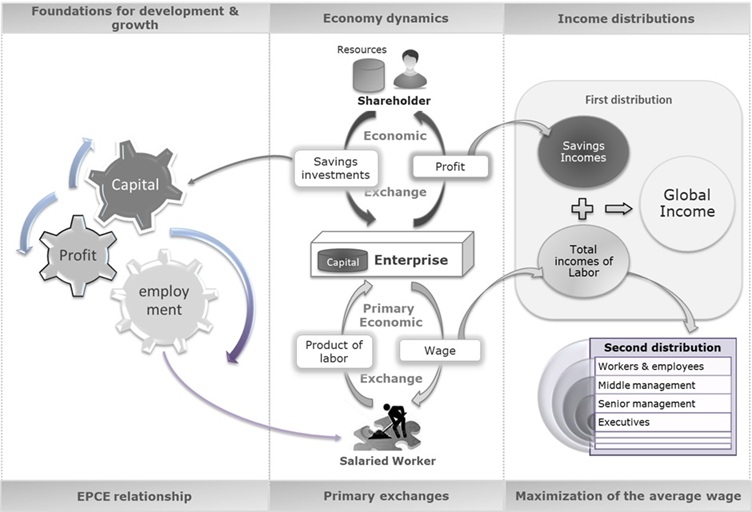
Figure 1 – General operating model of the economy
The income generator and it two controllers
The income generator
Within each nation, whether it is confederal or not, the income itself is exclusively income from labor for some and placement income for others. They are generated by all economic exchanges, both domestic and cross-border. Downstream of the generator, all economic transfers constitute an additional distributor, ultimately financed entirely by levies on income as well as legacies.
Bequests, including inheritance taxes and, when this levy is deemed to be too little to reduce the disparity of private assets, the addition of a wealth tax with its perverse effects, the use of which pays the price. The creation of economic wealth is exclusively provided by the generator which, at the same time, provides for the distribution of income before any redistribution. This leads to a problem as crucial as it is one of civilization: what are the mechanisms of distribution before any redistribution? Are they, for some of their cogs, intangible and, for others, modular? Does Yield capitalism tend to make the effects of these mechanisms more justified than the priority given to the race for capital gain? Is the maximization, in the natural (logical) slope of the market economy, that of placement income and the assets that provide it, or that of total income from labor? It is impossible for a defense of the general interest and an economic policy to be as relevant as possible without having correct answers to these questions in their foundations.
In the generator, two interconnected controllers are integrated. For those who have studied them closely enough, their acronyms EPCE and RPP' remind us that the initial E and the final E of one are those of Employment — Employment > Profit > Capital > Employment — and that the initial R of the other is that of rate of return, R, productivity P, profitability P': TPIP'.
The EPCE controller — Employment > Profit > Capital > Employment
The EPCE controller can be represented by an isosceles triangle, inscribed in a circle, with its vertices labeled Employment (E), Profit (P), and Capital (C). The system operates in a clockwise direction, following a steady clockwise rotation.

Figure 2 - EPCE regulator
This model reveals a powerful dynamic: the controller restores full employment more rapidly when its impulses are strengthened by avoiding self-financing from benefits. By shifting away from retained earnings, we directly enhance the appeal and variability of new placements in capital (C), as their effective yield becomes the primary driver of investment. This creates a virtuous cycle, making capital injections more attractive and responsive than when their returns are diluted — even if this means the prospects for capital gains (capital gains) are less spectacular or, as in the case of cooperatives, entirely excluded
The RPP’ controller — rate of return R, productivity P, profitability P’
As for the image that best gives the idea of what the RPPprime">RPP' relationship is, it is that of a Roberval balance whose beam rotates around an axis mounted on a cylinder. The first plateau is that of rate of return R, the scourge revolves around productivity P that the evolution of techniques increases, and the other plateau is that of profitability P'. The definitions of R, P and P' are such that any rate of return R is equal to a productivity P multiplied by a profitability P'. It is as safe as when, on a bank statement, the sum of the debits is different from the sum of the credits, then the final balance is different from the initial balance.
The TPIP' controller adjusts the profitability levels P' to the rate of return constraints R and the productivity performance P', the rate of return constraints R coming largely from the EPCE controller. National productivity P controls the evolution of the national total income. The increases in other productivity P are reflected in the decrease in competition in the sales profitability P' of enterprises.
Adam Smith, Jean-Baptiste Say, David Ricardo and Karl Marx have pointed to the tendency towards the equalization of return (rate of profit on capital) between the sectors of enterprises of the same nationality (mining, manufacturing, finance, transport, wholesale and retail trading, among others). Today, this teaching is in disuse. This does not mean that the trend in question is no longer a natural economic law. The objective political economy holds that RPP regulation intervenes not only between sectors of enterprises and enterprises in the same sector, but also up to the levels of the same ownership of the supplies sold by the enterprises; see Chapter 11.
The asymptotic decline in national profitability P' makes the market economy a producer of the maximization of total labor income under the constraint of a sufficient average of rate of return R of placements. Then this maximization is joint:
- full employment longer than underemployment.
- the incessant approximation of the prices at which enterprises sell to their sufficient level.
- income from real placements as a gradual replacement for pay-as-you-go pensions which, for reasons set out in Chapter 7, have the incorrigible disadvantage of not participating in the extension of periods of full employment.
The desired shift from capital gain capitalism to yield capitalism
But there is a general condition for obtaining these results. The full and prompt operation of the generator’s controllers must, deliberately, be preferred to the race for capital gain. Yield Capitalism, in which cooperatives have their place, must, politically, have prevailed over the business of capital gain. In other words, the capitalism of sufficient profit and full employment must have stopped the acceleration of the race for maximum enrichment for the big landowners, senior executives and higher-ranking politicians.
Chronic underemployment may be mainly due to a public levy (taxes + loans) that is so heavy and growing that it increasingly hampers the functioning of the EPCE">EPCE relationship, with the result that the national stock of capital is not up to the level necessary to increase the stock of sustainable jobs (capital, within the meaning of commercial enterprise law: the contributions of the members). In this case, it is distressing to have to note that the political class, which has its hands on the levers of such a country's economic policy, is proving incapable of explaining to its voters why public charges (operating expenses, subsidies, financial amortization of debt) must be reduced, vigorously and sustainably: because they have become a main cause of underemployment. It could not be more logical that the prescription for the activation of the EPCE">EPCE and RPP controllers should include what has been too quickly called "the golden rule", i.e. the concomitant compliance with two rules of public financial management – see economic policy 2.
The avenue of complete exchange
Defiance and weariness on the one hand, self-protection through silence on the other
Frédéric Bastiat formulated a social law of selection when he noted: "The public is made in such a way that it distrusts what is simple as much as it tires of what is not." To this mistrust as well as to this weariness, the academic authorities, the editors-in-chief and the highest elected authorities contribute as long as they refrain from openly taking sides for or against the innovation of the Objective Political Economy or any other attempt to publish the product of a really fundamental economic research but, a suspicious omen in many eyes, not yet academic or otherwise endorsed by a well-established institution.
This circumspection, which is very much in line with one of Auguste Detoeuf's impeccable aphorisms, "The human being who has arrived no longer moves",6 is all the more prudent because there is something much more compromising in the innovation of the Objective Political Economy than the theoretical rupture. From the first chapter, on growth, of the Major Economic Policy Guidelines , which take up the organic reforms detected during the assembly of the Primary Propositions of Economic Science, the implicit criticism of imperatives jumps out at the eyes, cruelly for those who are willing to remember having proclaimed that the provisions to be replaced by better or no ones were the right ones or the right ones. only possible.
By and for the euthanasia of rentiers, ostracism against the impartial spectator
We have overlooked the point of view of the impartial observer. We have clung too much to biased observations and errors of reasoning that create mirages. We have relied too much on the balance of power as the main line of conduct. We have been too satisfied with expedients, including compassion that gives a clear conscience when in the end it often proves to be counterproductive. In what we have inherited that is most solid, we have sold off too much. We have not had the courage to fully assume that in peacetime financial crises are above all the result of intellectual errors that lead to major management errors.
The precedent of ordoliberalism, born in Fribourg in the 1930s
The breakthrough of a new grand boulevard is nevertheless within our reach. Calling it "the avenue of complete exchange" will not, today, make its project more often enthuse than it will leave indifferent, or that it will excite here and there pre-programmed hostility. Coming from the left and the right in the democratic symbolism of today, the best socialism and the best liberalism converge economically and politically towards an Ordoliberalism. The latter is of the type that some twenty young professors and researchers of law and economics at the University of Freiburg began to cultivate in 1932, and which, from 1948 onwards, had as its fruit, by means of the Soziale Marktwirtschaft, what is retrospectively called the "German miracle".
Seven retrograde taboos
Economically, liberal socialism and social liberalism must participate in the overthrow of taboos in order to be better able to minimize structural unemployment and maximize total income from labor, as well as to obtain the wage differentials deemed appropriate:
- Fewer and fewer jobs provide those who work in them with a decent income because of robotization and globalization: an infringement of what full trade is able to provide.
- No less social inequalities without at least as much or more redistribution of money through public finances: an infringement of what distribution produces by itself in the middle of exchange.
- No employment without employer contributions and no dividends, in terms of returns on the placements in capital, without a substantial fraction of the profits being allocated to the self-financing of the enterprise operating the said capital: double violation of full trade.
- As few rentiers as possible, other than by means of pay-as-you-go pensions, the art of making society seems to be better applied and economic development is said to be better equipped with shock absorbers from competitive shocks: an infringement of full trade.
- No major privatization, particularly concerning the provision of medical care and its insurance, more generally no substantial reduction in the size of the welfare state, other than through IPOs and enterprises of enterprises: violation of full trade.
- From now on, there will be sufficient growth without a large buffer of subsidies and public debts financing charges: violation of full trade.
- No country providing for the prosperity of its population without enterprises whose aim is the maximum of "creation of value for the shareholder" dictates the taboo of which those who see a healthy necessity almost always fail to specify that this so-called "creation of value" is mainly or only capital gain: a highly pernicious violation of complete exchange.
Five healing wounds
Politically, turning one's back on the full-trade economy is an increasingly disastrous mistake in the long run:
- It is taking a step backwards in the application of the principle of subsidiarity, making civil society less and less able to take charge of itself.
- It transforms the contribution to the common good of the political class on the one hand into a skin of sorrow in terms of its usefulness, and on the other hand into a flying carpet at the expense of the community in terms of the wages and allowances of elected officials and senior executives of the public service.
- It perpetuates and multiplies social fractures.
- It makes immigration too tempting and integration too difficult.
- It increases the use of propaganda to pretend that these evils were only in adaptation to globalization and the overcoming of xenophobic nationalisms.